Prayer for the Fourth Sunday after Pentecost

O Lord, our God,
you have commanded us
to speak righteousness,
and to judge fairly;
Grant that no sin may be found in our mouths,
nor wickedness in our minds,
but that, from pure hearts,
we may speak those things that are right;
through Jesus Christ our Lord.
Amen.

Source: Freely modified from Mozarabic Collects, ed. Rev. Chas. R. Hale, New York, 1881, p. 31 #1 (Trinity 3)

“you have commanded us to speak righteousness” is a reference to Psalm 37:30Proverbs 8:8,

“and to judge fairly” is a reference to John 7:24

“no sin may be found in our mouths” is a reference to Psalm 39:1Psalm 59:12Ecclesiastes 5:6

“pure hearts” is a reference to Psalm 24:41 Timothy 1:52 Timothy 2:221 Peter 1:22


Mozarabic, ad.


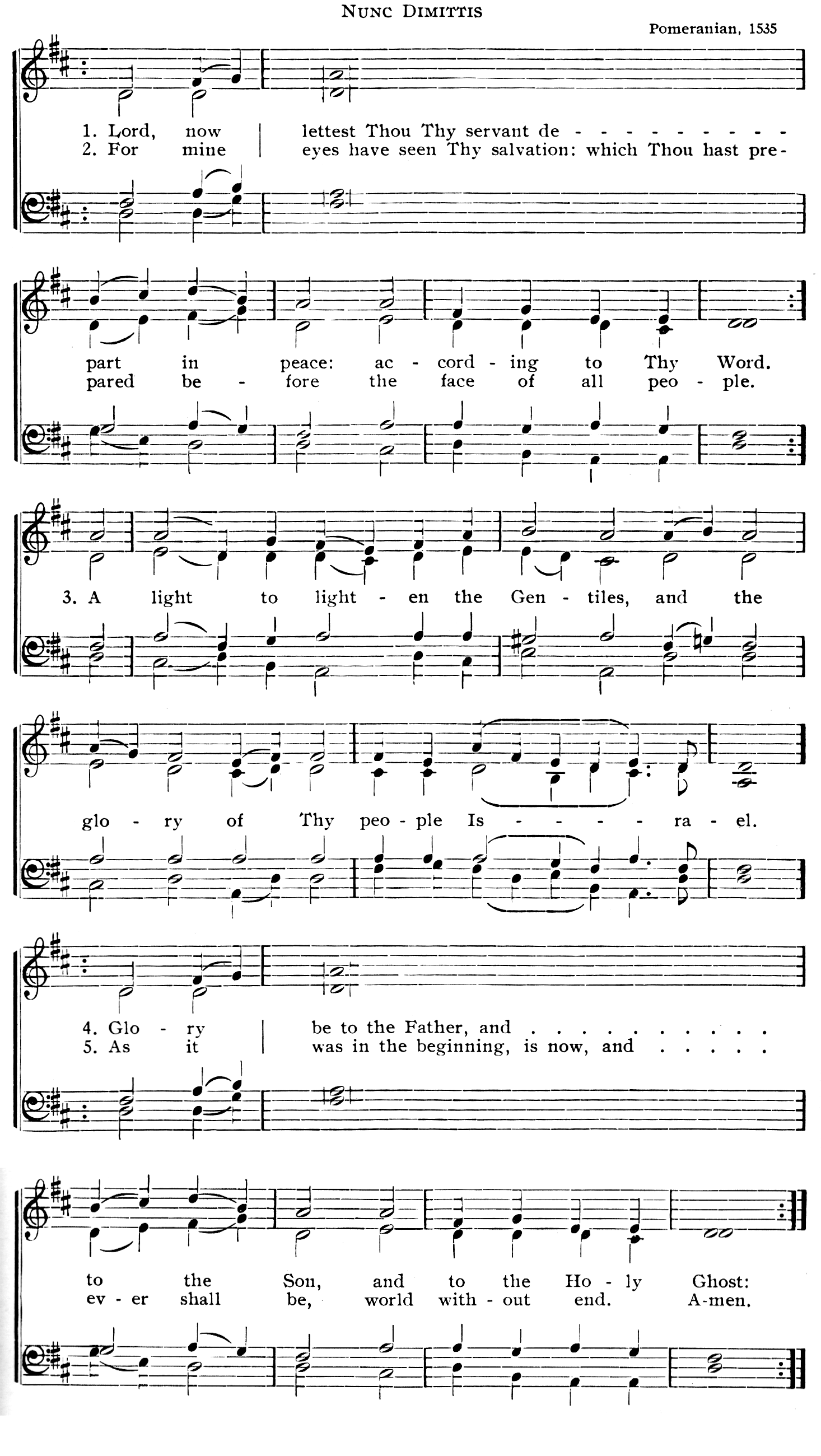
Nunc Dimittis and Prayer

Lord,
now you are letting your servant depart in peace,
according to your word;
for my eyes have seen your salvation
that you have prepared in the presence of all peoples,
a light for revelation to the Gentiles,
and for glory to your people Israel.
Luke 2:29-32 (ESV)

Almighty and eternal God,
we humbly pray,
grant that we may know
and praise your dear Son
as holy Simeon did,
who took him up in his arms,
spiritually knew and confessed him;
through the same, Jesus Christ our Lord.
Amen.

Source of the prayer: Martin Luther   [Die Gebete Luthers#12, #309]

Source of this version: http://www.godrules.net/library/luther/NEW1luther_f7.htm

See also Luther’s Works (American Edition), Volume 53, p. 132.

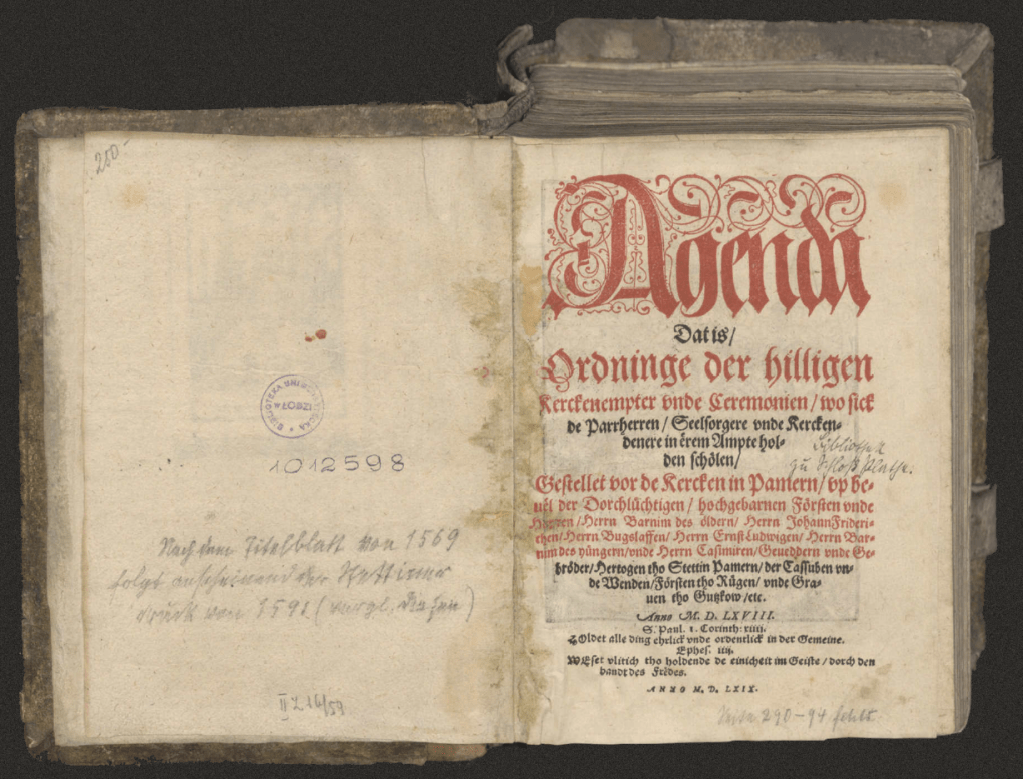
The Nunc Dimittis sung to the tune from the Pomeranian Agenda.


NuncDimittis

from Book of Hymns (WELS, 1913)

Original prayer in German:

Allmechtiger ewiger Gott, wir bitten dich herzlich, gib uns, das wir deinen lieben Sohn erkennen und preisen wie der heilige Simeon in leiblich in die armen genommen und geistlich gesehen und bekant hat, durch denselben deinen son Jesum Christum, unsern Herrn.

Source: Die Kirchenordnung. Albertinisches Sachsen. Die Evangelischen Kirchenordnung des XVI.  Jahrunderts


EvLuthHeritageAd

Prayer for the Third Sunday after Pentecost

O God, you alone are holy,
by your grace you have purified the unholy,
and have written our names in heaven.
Continue to sanctify us by your Spirit
and cleanse us from every spot of sin,
that we may live to your glory;
through Jesus Christ,
our most blessed Lord and Savior.
Amen.

Source: Based upon Mozarabic Collects, ed. Rev. Chas. R. Hale, New York, 1881, p. 30 #3 (Trinity 2)

Original reads: O God, you alone are holy, by your grace you purify the unholy. Cleanse us from every spot of sin, so that, justified by you, our names may be written in heaven; through Jesus Christ, our most blessed Lord and Savior. Amen.

“O God, you alone are holy” is a reference to Revelation 15:4

“you have purified the unholy” is a reference to Malachi 3:3

“written our names in heaven” is a reference to Isaiah 6:6-7

“cleanse us from every spot of sin” is a reference to 1 John 1:7, See also Psalm 51:2


Mozarabic, ad.


Anatomy of a Collect

A collect (pronounced KAHL-lekt) is an ancient prayer form that has a certain structure. The word collect comes from the Latin phrase ecclesia collecta, which means that it is a public prayer prayed by and for the assembled church. It is modeled after the Lord’s Prayer.

The Lord’s Prayer begins with an address to God:

Our Father,

…and then has an attributive phrase that says something about God:

who art in heaven,

This is followed by one or more petitions:

Hallowed be thy Name.
Thy kingdom come.
Thy will be done on earth as it is in heaven.
Give us this day our daily bread.
And forgive us our trespasses as
we forgive those who trespass against us.
And lead us not into temptation;
But deliver us from evil:

…and it closes with a doxology:

For thine is the kingdom, and the power,
and the glory, for ever and ever. Amen.

A collect also begins with an address, followed by an attributive phrase (some call this the basis for the petition that focuses on some characteristic of God) and a petition. It adds some result or benefit that  is desired, followed by a termination which is also a doxology (word of praise). Classic collects are very brief and to the point (some use the word “terse”) in their choice of words, especially for the petitions.

Here is a collect from the Book of Common Prayer for the Second Sunday in Advent (in traditional English):

Merciful God, who sent thy messengers the prophets to preach repentance and prepare the way for our salvation: Give us grace to heed their warnings and forsake our sins, that we may greet with joy the coming of Jesus Christ our Redeemer; who liveth and reigneth with thee and the Holy Spirit, one God, now and for ever. Amen.

This has all the parts. We will use this color coding for identification:

Address, attributive phrase, petition, result, termination.

Merciful God, who sent thy messengers the prophets to preach repentance and prepare the way for our salvation: Give us grace to heed their warnings and forsake our sins, that we may greet with joy the coming of Jesus Christ our  Redeemer; who liveth and reigneth with thee and the Holy Spirit, one God, now and for ever. Amen.

A collect may omit one of these and still be considered a collect. The collect for the First Sunday in Advent in the Book of Common Prayer has no attributive phrase.

Almighty God, give us grace that we may cast away the works of darkness, and put upon us the armor of light, now in the time of this mortal life in which thy Son Jesus Christ came to visit us in great humility; that in the last day, when he shall come again in his glorious majesty to judge both the quick and the dead, we may rise to the life immortal; through him who liveth and reigneth with thee and the Holy Ghost, one God, now and for ever. Amen.

Some collects, especially the longer prayers in rites found in agendas (liturgy books), are extended collects. An extended collect sometimes has longer phrases, or sometimes has more than one attributive phrase, petition or result. Look at this extended collect by Veit Dietrich:

Lord God, heavenly Father, we thank you that you have sown the good seed of your holy Word in our hearts. By your Holy Spirit cause this seed to grow and bring forth fruit, and defend us from the enemy, that he may not sow weeds there. Keep us from worldly security, help us in all temptations and give us at last eternal salvation; through your beloved Son, who lives and reigns with you and the Holy Spirit, one true God, now and forever. Amen.

See how the attributive phrase that says something about our heavenly Father becomes a petition of thanks by itself, “…we thank you that you have sown the good seed of your holy Word in our hearts.” And then there are several petitions alternating with two results.

The termination is a reminder of Jesus’ invitation for us to bring all things to the Father in his name (John 15:16). “Through Jesus Christ our Lord” is a simple or short termination. The full termination is also a confession of faith in the Triune God. “….through (your Son,) Jesus Christ our Lord, who lives and reigns with you and the Holy Spirit, one God, now and forever.” Some scholars believe that this full trinitarian termination was added shortly after the Council of Nicea in A. D. 325 as an added confession that we pray to and confess the one true God who reveals himself to us in Scripture as Father, Son and Holy Spirit.

St. Paul used a form, very much like a collect, in the first chapter of his letter to the Ephesians. Look at the attributive phrases (…who has blessed us in Christ with every spiritual blessing…), the phrases that express desired results (…to unite all things in him, things in heaven and things on earth.)

To read classic collects, click here:  https://acollectionofprayers.wordpress.com/tag/collect/

To read extended collects, click here: https://acollectionofprayers.wordpress.com/tag/extended-collect/

See Luther D. Reed in The Lutheran Liturgy, p. 279-287, and Fred Precht in Lutheran Worship, History and Practice, p. 411-412.

See also “How to Make a You-Who-Do-To-Through Prayer.”

Prayer for the Second Sunday after Pentecost

O God,
your angels always enjoy your peace,
and you also share your peace with us.
In our time on earth, lead us in the way of peace,
and give us complete peace
in our inheritance in your kingdom;
through your Son,
Jesus Christ, our Lord.
Amen.

Source: Freely modified from Mozarabic Collects, ed. Rev. Chas. R. Hale, New York, 1881, p. 30 #2 (Trinity 1)

“lead us in the way of peace” is a reference to Luke 1:79


Mozarabic, ad.


Prayer for the Holy Trinity

Father, Son and Holy Spirit,
three persons, but one God,
enlighten our hearts and minds,
make us steadfast in the true faith,
equip us for good works,
and bring us to life eternal;
through your mercy, O our God,
you are blessed,
and live and govern all things,
now and forever.
Amen.

Source: Freely modified from Mozarabic Collects, ed. Rev. Chas. R. Hale, New York, 1881, p. 30 #1

“Father, Son and Holy Spirit” is a reference to Matthew 28:19

“but one God” is a reference to Deuteronomy 6:4

“make us steadfast in the true faith” is a reference to 1 Corinthians 15:58Colossians 1:23

“equip us for good works” is a reference to2 Timothy 2:212 Timothy 3:17Titus 3:1


Mozarabic, ad.


Give Us Your Spirit

O God,
at this time, you sent your Holy Spirit on your apostles,
and clothed them with power from on high.
Grant that the same blessed Spirit,
working in and through the ministers of your Church,
may make the Word preached and the sacraments administered by them
effectual to the salvation of many souls;
through your mercy and for the sake of Jesus Christ,
your Son, our Savior.
Amen.

Source: Freely modified from Mozarabic Collects, ed. Rev. Chas. R. Hale, New York, 1881, p. 47 #3 (Ember Days in Whitsun-tide)

“and clothed them with power from on high” is a reference to Luke 24:49


Mozarabic, ad.


Prayer for Pentecost

O Holy Spirit,
on Pentecost you descended on the apostles as tongues of fire.
Take away all vices from our hearts,
and fill us with all wisdom
and spiritual understanding;
O blessed Spirit,
with the Father and the Son,
you live and reign,
ever one God,
now and forever.
Amen.

Source: Freely modified from Mozarabic Collects, ed. Rev. Chas. R. Hale, New York, 1881, p. 29 #2

“you descended on the apostles as tongues of fire” is a reference to Acts 2:3

“all wisdom and spiritual understanding” is a reference to Isaiah 11:2


Mozarabic, ad.


Pour on Us the Spirit of Your Love

O Lord,
in your mercy pour on us
the Spirit of your love,
that those you have fed
with one heavenly bread
may be united in heart and faith;
through your Son, Jesus Christ our Lord,
who lives and reigns with you and the Holy Spirit,
one God, now and forever.
Amen.

Source: Leonine Sacramentary, possibly fifth century. Translated for A Collection of Prayers.

As a block paragraph:

O Lord, in your mercy pour on us the Spirit of your love, that those you have fed with one heavenly bread may be united in heart and faith; through your Son, Jesus Christ our Lord, who lives and reigns with you and the Holy Spirit, one God, now and forever.

Original in Latin:

Spiritum nobis, Domine tuae caritatis infunde, ut, quos uno caelesti pane satiasti, una facias pietate concordes. Per Dominum nostrum Iesum Christum Filium tuum, qui tecum vivit et regnat in unitate eiusdem Spiritus Sancti Deus per omnia saecula saeculorum. Amen.

See also: http://www.preces-latinae.org/thesaurus/Euch/SacrumConv.html

AncientCollectsAd

This Saving Gift

We give you thanks, almighty Lord God,
that you have refreshed us
with this saving gift
of your Son’s body and blood.
We pray, in your mercy,
that you would bless us with these
for the strengthening our faith in you
and for increasing the warmth of our love
toward one another;
through Jesus Christ, your Son, our Lord.
Amen.

Source: Martin Luther, Deutsches Messe (p. 14), also in Pommersche Agende (p. 380#1).  [Die Gebete Luthers, #2]


Original German from the Pommersche Agende:

Wir danken dir, allmächtiger Herr Gott, daß du uns durch diese heilsame Gabe des Leibes und Blutes deines Sohns hast erquicket, und bitten deine Barmherzigkeit, daß du uns Solches gedeien lassest, zum starken Glauben gegen dir und zu feuriger Liebe unter uns allen, durch Jesum Christum deinen Sohn, unsern Herrn, Amen.

As it was in Luther’s Deutsches Messe:

Wir dancken dir almechtiger Herr Gott das du vns durch dise heylsame gabe hast erquicket vnd bitten deyne barmherzigkeyt das du vns solchs gedeyen lassest zu starckem glauben gegen dir vnd zu brunstiger liebe vnter uns allenn ümb Jesus Christus vnsers herrn willen. Amen.

Translation note:

Sometimes the word heilsam is rendered as “salutary,” a word meaning “producing a beneficial effect,” “remedial,” or “promoting health.” Theologically it can mean “beneficial for salvation.”


EvLuthHeritageAd